







Every day, we use gadgets like smartphones, computers, high-definition screens, and quality speakers. Behind these devices, there is a hidden group of elements that help them work smoothly. These metals act much like vitamins do for our bodies. Although they are not used by themselves, they become part of alloys and compounds that make our devices smaller, more efficient, and more powerful.
They are RARE EARTH MATERIALS.
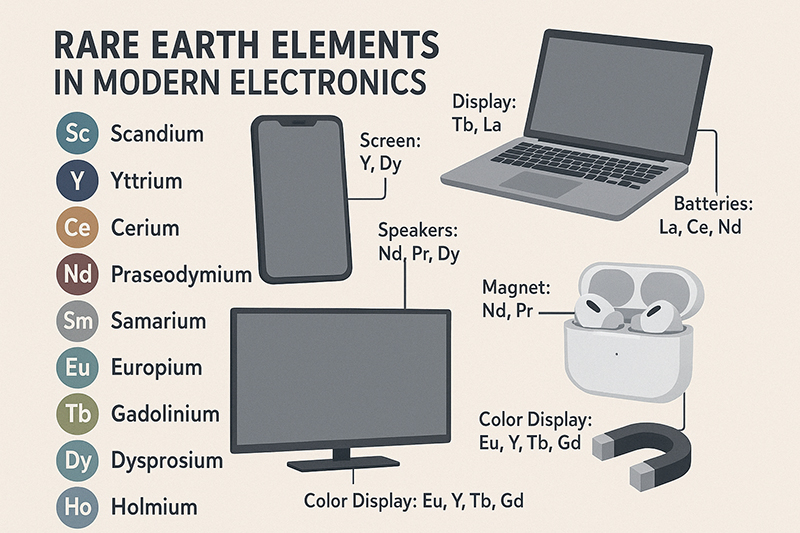
Neodymium and praseodymium are two metals that work together in making very strong magnets. These magnets, known as neodymium-iron-boron magnets, are the strongest permanent magnets available today. You may not know it, but these magnets help run small motors in hard disk drives. They also are found in the tiny speakers and vibration motors inside our smartphones. In headphones and portable loudspeakers, these metals help deliver clear and pleasant sound. In camera modules, they assist with quick and smooth focusing. In many cases, praseodymium is mixed with neodymium to make the magnets work even better under higher temperatures, ensuring that the devices perform reliably even when things heat up.
Dysprosium and terbium add stability to the already reliable magnets made with neodymium and praseodymium. When a magnet works in conditions that generate heat, it can easily lose its strength. Even a small amount of dysprosium or terbium mixed into the magnet helps it hold on to its properties. This mixture is very important in electric motors found in vehicles and in high-power machines used in factories. Wind turbines, which help us produce clean energy, also rely on these stable magnets. Without dysprosium and terbium, the performance of these compact motors would quickly get worse under stress or heat.

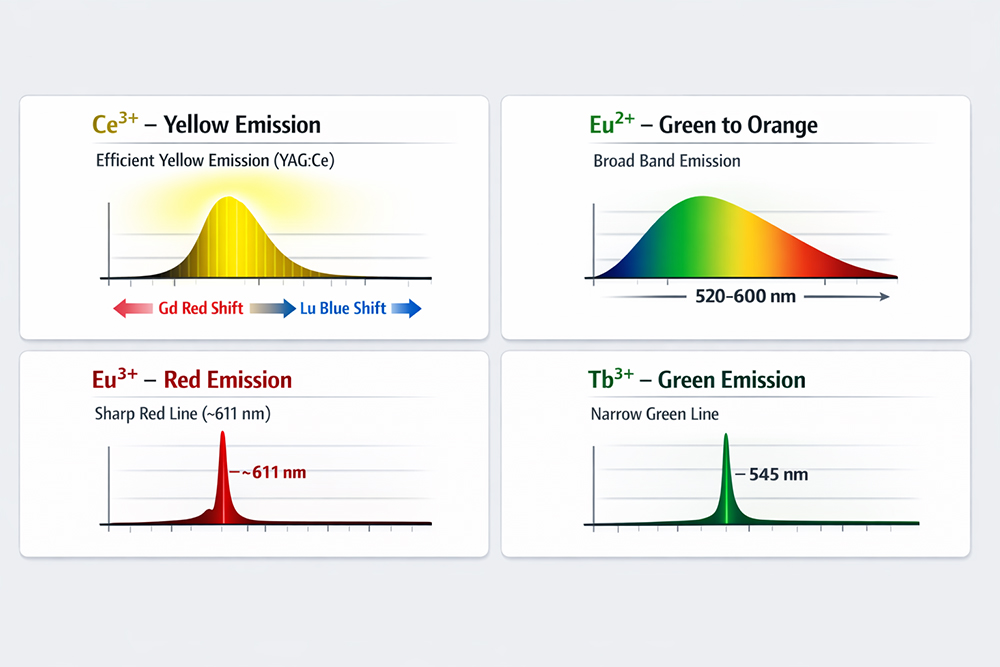
When we see the bright and lovely colors on our screens, it is europium and yttrium that contribute to the magic behind them. These metals are used to create phosphors, which are the compounds that emit light when exposed to energy. In modern light-emitting diode (LED) panels and bulbs, europium helps produce the red tones that are needed to balance the overall light. Together with other components, it ensures the white light we see from our modern lamps and screens is warm and visually pleasing. In older television sets, especially those with cathode ray tubes, europium and yttrium were essential in creating vibrant and lively images.
 panels and bulbs.jpg "light-emitting diode (LED) panels and bulbs")
Cerium is a very adaptable element. It has found its use in improving the surface quality of many glass products we use. In electronics, cerium oxide – a compound made from cerium – is widely used as a polishing agent. For example, it forms the basis of many polishing powders that give our smartphone screens and camera lenses a smooth, scratch-free finish. Besides its role in polishing, cerium also works in LED lighting. In phosphor components that convert blue LED light into warm white light, cerium shows its versatility. This easy-to-use metal is a good example of how a single element can have more than one useful role in modern technology.
Lanthanum makes a big difference in the quality of optical glass. When added as lanthanum oxide, glass becomes sharper and clearer. In practical terms, thinner and lighter lenses can be produced for cameras and telescopes without sacrificing picture quality. The result is a reduction in problems like color margins or blurred edges in images.
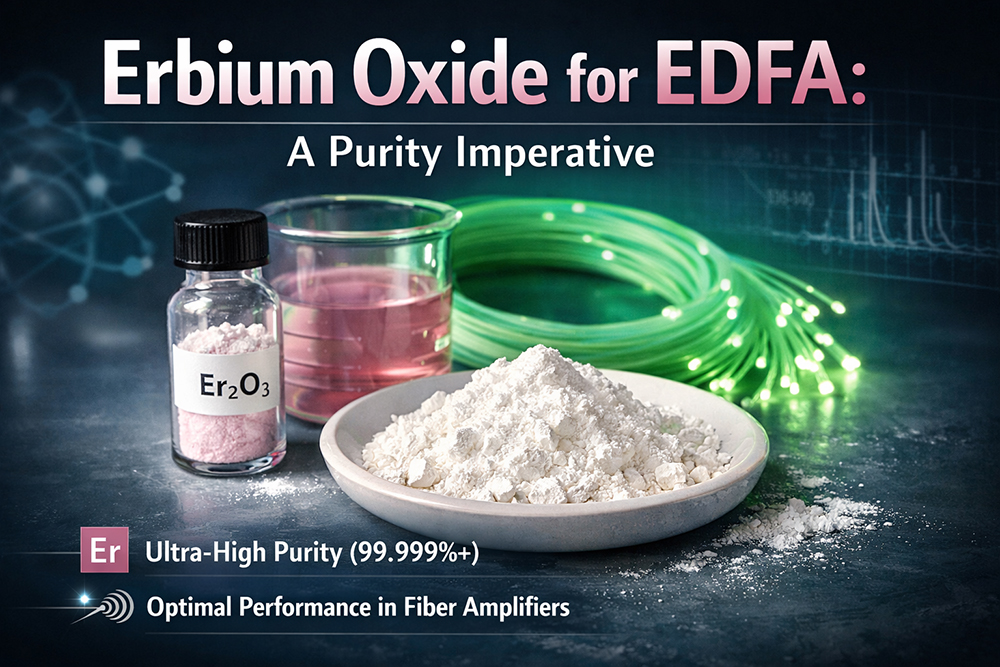
In the world of long-distance communication, efficient transmission of signals is crucial. Erbium provides a solution by boosting signals in fiber optic cables. Known as erbium-doped fiber amplifiers, these components strengthen light signals over long distances. In simpler terms, they help the internet work well across continents by transmitting data without constant conversion between light and electricity. The role of erbium is a key reason why high-speed and reliable communication networks exist today.
| Rare Earth Element Group | Main Function | Typical Application in Electronics |
|---|---|---|
| Neodymium and Praseodymium | Create exceptionally strong permanent magnets | Hard disk drive motors, smartphone speakers, vibration motors, headphones, and autofocus camera modules |
| Dysprosium and Terbium | Enhance magnet stability under heat | Electric vehicle motors, industrial high-power motors, and wind turbine generators |
| Europium and Yttrium | Provide crucial light emissions for colors | Light-emitting diode displays and lighting systems, as well as older television sets using cathode ray tubes and plasma displays |
| Cerium | Polish surfaces and contribute yellow light | Smartphone and display glass polishing, white LED lighting |
| Lanthanum | Improve the clarity and sharpness of optical glass | High-quality camera and telescope lenses |
| Erbium | Strengthen optical fiber signals | Long-distance fiber optic communication networks |
Rare earth elements are far more than simple ingredients in advanced devices. They are an essential part of everyday electronics. There is no easy substitute for these metals. Their special properties leave them unmatched when it comes to creating strong magnets, vivid displays, smooth lenses, and efficient communication systems. Producing these elements is not straightforward. Mining and refining them takes careful and complex work, because they are found in only a few areas of the world.
With the increased need for technologically advanced and environmentally friendly products, availability and stability of these resources have become very important. Countries and industries depend on a secure supply to keep everything running smoothly, from small personal devices to massive industrial machines. In my many years of work and study, I have seen firsthand how a dependable source of these elements can boost not just technology but also economic and national security.
The rare earth elements discussed are the backbone for modern technology. They have quietly aided every advancement we have today. If simple magnets could not be produced reliably, our vehicles, computers, and communication networks would not achieve their current levels of performance. Without high-quality optical glass, our cameras would not capture clear images; without the right phosphors, the colors on our screens would be dull.
For anyone working in the industry or simply intrigued by the magic hidden inside everyday gadgets, it is worth remembering how these elements help power our digital world. These metals, tucked away in the circuits of our devices, serve as the invisible booster that makes modern electronics work as they should.
For trusted and quality rare earth materials, consider Stanford Materials Corporation as your reliable supplier.
Eric Loewen
Eric Loewen graduated from the University of Illinois studying applied chemistry. His educational background gives him a broad base from which to approach many topics. He has been working with topics about advanced materials for over 5 years at Stanford Materials Corporation (SMC). His main purpose in writing these articles is to provide a free, yet quality resource for readers. He welcomes feedback on typos, errors, or differences in opinion that readers come across.

 Inquiry List