







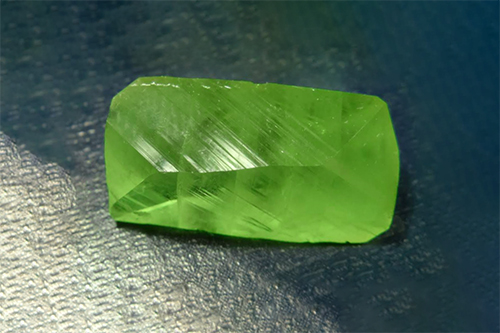
Praseodymium sulfate is a rare earth compound that many in the field of chemistry have worked with over the years. This material appears as a green crystalline solid and is noted for its unique behavior in solution. The compound in hand is the octahydrate form, Pr₂(SO₄)₃·8H₂O. In this article, we take a closer look at its basic characteristics, its structure in crystal growth, and the methods used to prepare it in the laboratory. A friendly, seasoned approach helps to understand this compound with clarity.
This compound has the molecular formula Pr₂(SO₄)₃·8H₂O. One of its striking features is its bright green color, which sets it apart from many other metal salts such as those of copper or iron. Besides its color, praseodymium sulfate shows interesting temperature-dependent solubility behavior. Unlike most compounds, its solubility decreases as the temperature rises. This behavior has been known to help separate it from other non-rare earth compounds during purification.
The physical density of the octahydrate is around 2.8 to 3.7 g/cm³, and the melting point is high enough (over 1,000 °C) to indicate that it is a stable compound under normal atmospheric conditions. When the salt is stored in air for prolonged periods, the crystals slowly lose their bright hue, turning whitish, which suggests that they are sensitive to ambient moisture and oxygen levels. This means that careful storage is necessary to maintain the original quality of the crystals.
The crystal structure of praseodymium sulfate octahydrate is monoclinic. When viewed under a microscope or with simple optical techniques, the crystals exhibit biaxial optical properties. This means that light passing through them will show different refractive indices depending on the angle of view. With lattice constants measured in the range of 1300 to 1900 pm, these values are in keeping with other similar rare earth sulfate crystals.
Under controlled conditions, one can grow crystals that are about 20 millimeters in size. Their bright green color and clear form are attractive features that not only intrigue scientists but also collectors of rare minerals. In simple laboratory experiments, these crystals are typically grown by dissolving praseodymium oxide in a dilute solution of sulfuric acid and then allowing the mixture to slowly cool and evaporate. The controlled temperature during this process is key as it affects the rate at which the sulfate dissolves and subsequently crystallizes.
Growing praseodymium sulfate crystals can be both rewarding and instructive. The process starts with Pr₂O₃, which can be purchased online from us here. Once the oxide is obtained, it is reacted with a weak acid, often a diluted form of sulfuric acid. A common laboratory practice involves chilling the reaction container in an ice bath. This step is done to improve the compound’s solubility, since praseodymium sulfate has the unusual trait of dissolving better at lower temperatures.
After dissolution, the mixture is left undisturbed for about a month. The crystals then grow slowly over time. Because the solubility decreases as the temperature increases, a consistent cool environment is maintained to ensure steady growth. Although this process is not rapid, the end product is a collection of well-formed, bright green crystals that many find visually pleasing.
A note for those handling these chemicals: due to the low solubility of the compound and its sensitivity to air, the crystals are often transferred into a container filled with liquid paraffin for storage. This practice helps to protect them against drying out and potential degradation. In a laboratory setting, clear labels and careful documentation of each step are essential. Even though this method takes patience, it is a reliable way to produce high-quality praseodymium sulfate crystals.
While praseodymium sulfate is primarily of academic interest and is used in research on rare earth elements, it has some practical applications as well. In some chemical synthesis and catalytic processes, compounds similar to praseodymium sulfate have been used as precursors or as parts of more complex formulations. In these applications, the knowledge of its temperature-dependent solubility and structural properties can be very useful.
When handling this compound, safety is a priority. It is known to be non-flammable, but caution must be observed due to its potential to irritate the skin and eyes. Wearing protective clothing, gloves, and eye protection is advised during any experimental procedure. Additionally, because some rare earth compounds can be hazardous if inhaled or ingested, working in a well-ventilated area or under a fume hood is recommended.
The procedures used in the synthesis and preparation of praseodymium sulfate are reflective of standard practices in chemical laboratories that deal with rare earth elements. Even though there is an element of trial and error—especially when adjusting parameters like temperature or acid concentration—the process remains straightforward when proper laboratory techniques are observed.
Many chemists have noted that the behavior of praseodymium sulfate in solutions is quite different from other salts. During many hands-on sessions, the compound has been observed to have a bright, attractive appearance that contrasts with more common salts. The growing crystals often show slight variations in size and brightness, depending on the precise conditions during the experiment.
Some seasoned scientists recall that careful attention to temperature and solution purity makes a significant difference. For instance, slight impurities can lead to smaller or less well-formed crystals. Similarly, if the solution is not maintained at lower temperatures during dissolution, the growth may be impaired. These small details can be the difference between a successful crystal-growing experiment and one that fails to produce consistent results.
Praseodymium sulfate, specifically the octahydrate form Pr₂(SO₄)₃·8H₂O, is a compound with unique chemical properties and an appealing bright green color. Its unusual solubility pattern and sensitive storage requirements set it apart from many other salts. Over the years, careful laboratory work has shown that maintaining low temperatures is necessary during its dissolution and crystallization processes. Such consistent laboratory practices are key to obtaining high-quality crystals that will remain intact with proper storage methods, such as immersion in liquid paraffin.
For those looking for reliable source materials for their laboratory needs, high-quality praseodymium compounds such as this are available from Stanford Materials Corporation (SMC).
Eric Loewen
Eric Loewen graduated from the University of Illinois studying applied chemistry. His educational background gives him a broad base from which to approach many topics. He has been working with topics about advanced materials for over 5 years at Stanford Materials Corporation (SMC). His main purpose in writing these articles is to provide a free, yet quality resource for readers. He welcomes feedback on typos, errors, or differences in opinion that readers come across.

 Inquiry List