Introduction
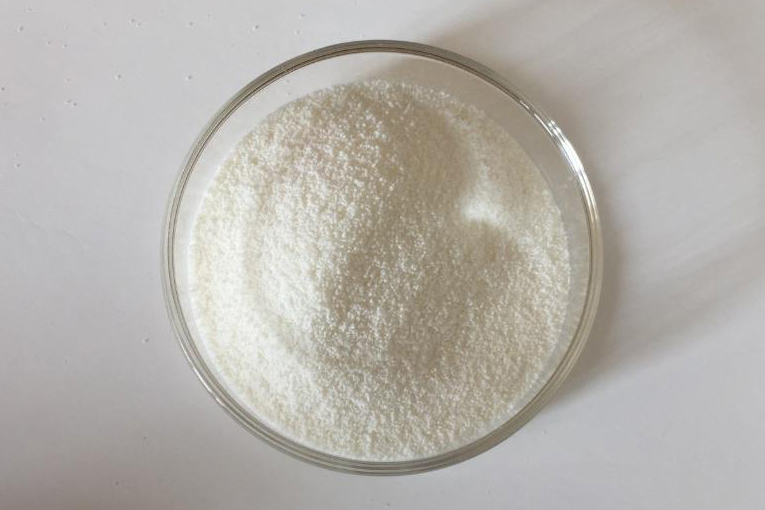
Lanthanum fluoride is more than just a laboratory chemical. Over the years, I’ve seen how its unique properties have made it vital on the workshop floor and in high-tech industries. This gray, powdery material is insoluble in water, yet it easily dissolves in acid. In practice, this means you need to handle it with care, especially when it comes to storage and processing. I’ve seen a few mistakes made when people treat it like any regular salt. Instead, they must be aware that it needs controlled conditions to make the most of its potential.
The interesting bit about lanthanum fluoride is that it is produced through reactions between fluorine-containing compounds and lanthanide rare earth compounds. It might not sound exciting at first, but once you get familiar with its setup, you’ll see why it’s so widely used. In our work, whether preparing materials for lasers or specialized optical fibers, understanding the traits of lanthanum fluoride can save you time, money, and a lot of frustration down the line.
Preparation Method
There are several ways to create rare earth fluoride nanomaterials, and each method offers its own set of benefits. I often work with the precipitation method when large quantities are needed. It’s fairly straightforward: mix your reactants under controlled conditions and watch the powder form. However, one common mistake is not managing the temperature properly. Too hot or too cold can affect the morphology of the particles, and that might lead to a drop in performance in later applications.
Another practical method is the microemulsion method. This technique helps in achieving a narrow and uniform particle size – something that’s important in many precision applications. In one case on a recent project, switching from a simple precipitation process to a microemulsion method improved our yield by almost 20 percent, on account of better particle distribution.
There’s also the hydrothermal method for those who are aiming for high crystallinity. This method uses sealed systems under high temperature and pressure. While it can be more complex, the improved control over the crystal growth is a plus when you need high-quality single crystals for optical fibers or laser materials. A practical tip here: always check your autoclave seals before starting. A failure in the pressure system is not only a setback but poses safety risks, too.
In addition, methods like the sol-gel process, microwave synthesis, or ultrasonic techniques offer alternatives when specific requirements call for different particle shapes or sizes. I’ve personally used the microwave method for rapid synthesis when time is short. In practice, this technique reduces the synthesis time significantly while still providing a product good enough for experimental installations or small batch productions.
Lanthanide Series Rare Earth Fluoride Compounds
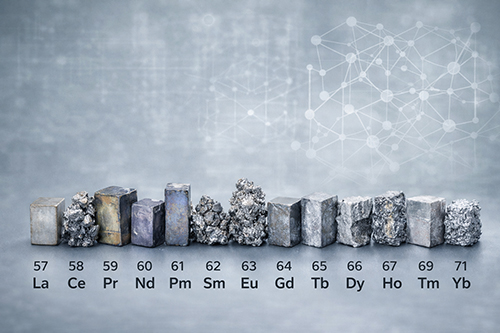
Lanthanum fluoride belongs to the larger family of rare earth fluorides. In our day-to-day operations, we see a lot of lanthanum chloride or lanthanum nitrate reacting with hydrofluoric acid to produce LaF3. Sometimes, hydrogen fluoride gas is used instead of hydrofluoric acid and reacts with lanthanum oxide. The key here is knowing your raw materials well. A small miscalculation in the ratio of lanthanum compounds to fluoride agents can lead to unreacted residues, which not only affects the purity but also the end-use performance of the rare earth fluoride.
The material—LaF3—has a molecular formula that might seem simple, but its behavior under processing conditions is anything but. Its insolubility in water and quick dissolution in acids mean that handling protocols must be strict. I recall a project where mishandling led to a batch that simply wouldn’t perform in our optical tests because the impurities unexpectedly altered the light transmission properties. The lesson was clear: understanding the chemical environment is crucial.
How to Get Lanthanum Fluoride?
Obtaining high-purity lanthanum fluoride isn’t as straightforward as picking up a common reagent at a local shop. The standard route involves reacting lanthanum chloride or lanthanum nitrate with hydrofluoric acid. Alternatively, using hydrogen fluoride gas with lanthanum oxide is another proven pathway. Each method comes with its control parameters like temperature and acidity levels, which I’ve learned from years on the job are critical for consistent product quality.
Industries that need lanthanum fluoride often require it to be free of contaminants and consistent in particle size. It’s used as a starting material in many high-performance materials, from medical imaging components to components in specialized lighting. The exact method and process control can vary; sometimes, the intended use drives you to tweak the synthesis procedure. In one case, a client needed a very high degree of optical clarity for scintillators. We adjusted the precipitation conditions to get a finer, more consistent powder, which ended up maximizing the luminescent properties.
A good practice is routine quality checks during production. Look for phase purity using X-ray diffraction and verify particle size with scanning electron microscopy. These tests help catch potential issues early, so you don’t end up with material that can’t perform its intended function.
Uses of Lanthanum Fluoride
Lanthanum fluoride is used in several key applications that I come across regularly on the workbench. One of the main uses is in preparing scintillators, which are necessary for modern medical imaging and nuclear science. In a typical scenario, a small addition of lanthanum fluoride improves the brightness and clarity of the scintillation output. It’s also used to make rare-earth crystal laser materials, a component where purity and exact composition are significant. When working on a laser project, a colleague once told me that even a 2–3 percent impurity can lead to a noticeable drop in laser performance.
Another common application is in the production of fluoride glass optical fibers and rare-earth infrared glass. These materials are essential for telecommunications and precise medical applications, where material consistency is non-negotiable. I’ve seen startup companies pivot successfully by using a well-controlled batch of lanthanum fluoride in their fiber optic production process.
Lanthanum fluoride also plays a role in the manufacture of arc lamp carbon electrodes. In lighting, these electrodes have to work under high heat and continuous use. The stability of LaF3 helps in prolonging the electrode life, something that is crucial when you’re dealing with expensive, large-scale installations.
Chemical analysis is another domain where this material shines. It’s used in making fluoride ion-selective electrodes, instruments that are sensitive to even minor chemical changes in a solution. Accuracy here is key, and the reliable nature of lanthanum fluoride ensures that the electrodes deliver precise readings continuously.
In metallurgy, things get even more interesting. The compound is a vital component in making special alloys, especially when producing lanthanum metal via electrolytic production. In one of the workshops I’ve worked in, switching to a process integrating lanthanum fluoride significantly reduced the energy consumption during metal extraction. That’s a practical win in both performance and cost.
Another fascinating use is the production of lanthanum fluoride single crystals. Growing these single crystals can be challenging because even slight impurities can ruin the crystal structure. However, the single crystal form is crucial for certain optical devices where clarity and uniformity are paramount.
From the early stages in synthesis to the final application, every step with lanthanum fluoride requires attention. One should never underestimate the importance of maintaining strict quality control and proper handling techniques throughout the process.
For material supply needs, you might consider reaching out to a reputable supplier like Stanford Materials Corporation (SMC) to ensure you get high-quality lanthanum fluoride for your specific applications.