At Stanford Materials Corporation (SMC), we often get questions about the role of individual rare earth compounds in real-world applications. Today, I want to focus on one that deserves more attention than it usually gets: neodymium chloride.
Most people know neodymium for its powerful magnets. But before neodymium becomes a magnet, a metal, or a laser component, it often starts as a simple salt dissolved in water. That salt is neodymium chloride. In this post, I will walk you through what it is, how we prepare it, and why it matters across several industries, including aerospace, energy storage, and advanced manufacturing.
What Is Neodymium Chloride?
Neodymium chloride is an inorganic compound. In the lab, we prepare it by dissolving 0.312 grams of the salt in 250 milliliters of distilled water to create a standard solution for Nd(III) ions. That formulation is useful for chemical analysis because it gives you a reliable baseline.
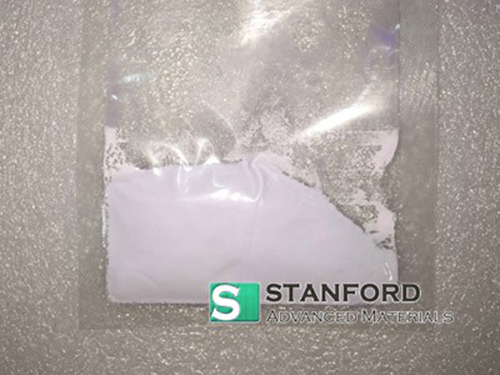
From a manufacturing perspective, we can also produce neodymium chloride from neodymium oxide. The process involves chlorination in the presence of carbon. The result is a versatile starting material for doping, synthesis, and extraction.
Why It Matters for Advanced Applications
Over the past few years, researchers have found neodymium chloride useful in more than just analytical chemistry. I have been following several developments closely, and I want to highlight the ones I believe have the most commercial potential.
1. Transparent Laser Ceramics
Neodymium-doped YAG (yttrium aluminum garnet) is a well-known laser material. The conventional route uses solid-state reactions, but coprecipitation methods are gaining ground. In that process, we dissolve yttrium chloride, aluminum chloride, and neodymium chloride together in water. We then add the mixture slowly to a solution of ammonium hydrogen carbonate or ammonium sulfate. The result is an ultrafine powder that can be sintered into transparent ceramics at lower temperatures compared to traditional methods. For applications where reliable laser systems are critical, this matters.
2. Nanocrystalline Permanent Magnets
When we talk about neodymium-based magnets, most people think of the NdFeB alloy. What is less discussed is how we get there from a salt. One method that I find particularly elegant is the Pechini-type sol-gel process using neodymium chloride hexahydrate as the starting material.
The process combines neodymium chloride hexahydrate with iron chloride hexahydrate, boric acid, citric acid, and ethylene glycol. After synthesis and calcination, we get a neodymium-iron-boron oxide powder. Reduction with calcium hydride at 800 degrees Celsius under vacuum produces Nd₂Fe₁₄B nanoparticles around 25 nanometers in size. The byproduct is calcium oxide, which washes away easily with water. For next-generation battery components and high-energy product magnets, this level of control is exactly what we need.
3. Photocatalytic Materials
There is also growing interest in using neodymium chloride for doping metal oxide semiconductors. One example is tin dioxide. In a typical hydrothermal synthesis, stannous chloride is dissolved in distilled water with urea. Adding one percent neodymium chloride introduces Nd doping. The pH is adjusted to 13 with sodium hydroxide, and the mixture is processed under microwave irradiation until the solvent evaporates completely. The resulting material shows enhanced UV-assisted photocatalytic activity. For environmental remediation and self-cleaning surfaces, this could be a practical solution.
4. Organic-Inorganic Hybrid Materials
Another direction that has caught my attention is the use of neodymium chloride to construct rare earth-based polyoxometalates. In one reported synthesis, researchers reacted neodymium chloride with Keggin-type silicotungstates and organic ligands in a mixed ethanol-water solution. The isolated yields ranged from 45 to 50 percent. Interestingly, using neodymium chloride versus yttrium nitrate changed the pH of the reaction system, which led to completely different crystal structures. That kind of tunability is valuable when we are designing materials for specific electronic or optical functions.
5. Rare Earth Extraction
Finally, neodymium chloride serves as a feedstock for extraction studies. In one recent experiment, macroporous chloromethylated styrene divinyl benzene resin was treated with di-2-ethyl hexyl phosphoric acid (D2EHPA) and then used to extract rare earth elements from solutions containing praseodymium chloride and neodymium chloride. Hydrochloric and sulfuric acids were used for pH adjustment. This type of work is directly relevant to our efforts at SMC to improve rare earth separation efficiency.
A Few Practical Notes
If you are working with neodymium chloride in your own lab or production line, keep a few things in mind.
First, the hexahydrate form is common and stable, but always check the purity grade. For analytical work, 99.9 percent or higher is recommended. For bulk synthesis, slightly lower grades may be acceptable depending on your final application.
Second, neodymium chloride is hygroscopic. Store it in a tightly sealed container in a dry environment. Moisture absorption will affect your mass measurements and reaction stoichiometry.
Third, when you prepare standard solutions, use distilled water and calibrate your glassware. Small errors in concentration will propagate through your analytical results.
Where We Fit In
At Stanford Materials Corporation (SMC), we supply high-purity neodymium chloride and related rare earth compounds for research, development, and production. Our customers work in aerospace, defense, energy storage, and advanced manufacturing. Whether you need a small batch for a proof-of-concept or a larger volume for scale-up, we can work with you.
I also encourage you to look at our other resources on rare earth metals, including our technical data sheets and application notes.
Closing
Neodymium chloride is not just an analytical standard. It is a gateway to high-performance ceramics, advanced magnets, photocatalysts, hybrid materials, and better extraction processes. As we continue to push the boundaries of what rare earth materials can do, I expect we will see even more creative uses for this versatile compound.
If you have questions about neodymium chloride or any of our other products, feel free to reach out through the SMC website.
References and Further Reading
The information in this post is drawn from peer-reviewed literature, including:
-
Solvent Extraction, Sequential Separation and Trace Determination of La(III), Ce(III), Nd(III) and Gd(III) with 2,14-bis[m-nitrophenyl]-Calix[4]Resorcinarene-8,20-bis[N-phenylbenzo]-dihydroxamic Acid (2023)
-
Enhanced UV-assisted photocatalytic activity of doped and co-doped SnO₂ nanostructured material (2023)
-
Extractive Metallurgy of Rare Earths (2019)
-
Compositional Optimization and New Processes for Nanocrystalline NdFeB-Based Permanent Magnets (2017)
-
Syntheses and structures of three organic–inorganic hybrids with different 2D structural types constructed from rare earth polymers and Keggin-type silicotungstates (2018)