







Lanthanum Fluoride has earned its place in high-tech fields thanks to its unique set of properties. Over the years, many have learned that heating this compound can adjust its characteristics to suit specific needs. In our discussion, we see that controlled heat treatment is a useful way to fine-tune the structure and performance of Lanthanum Fluoride for various applications.
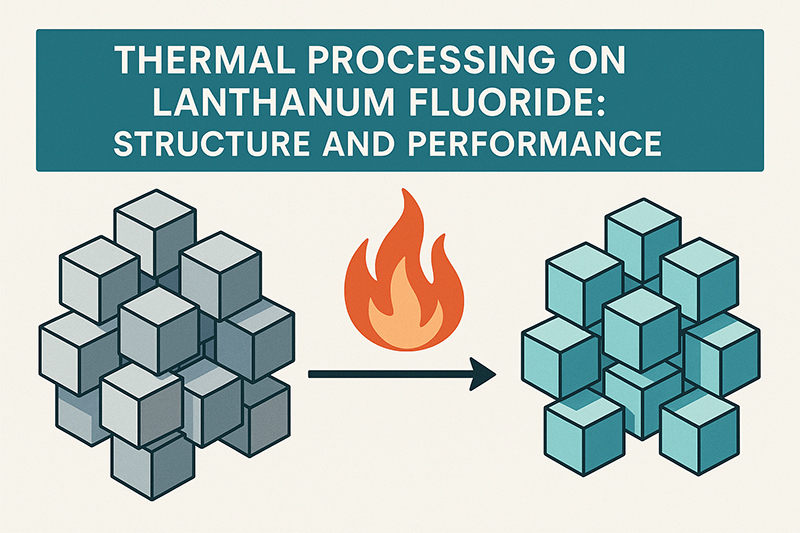
Heating Lanthanum Fluoride leads to changes in its microscopic structure. When a sample is sintered, the grains tend to grow and small defects in the material gradually reduce. As a result, the material becomes more compact. In plain terms, imagine putting a rough brick into a kiln; controlled heat brings its tiny cracks together, letting the brick become stronger and denser.
The structure of Lanthanum Fluoride often changes with higher temperatures. Typically, the compound shifts from a hexagonal structure known by some as the tysonite form to a different form that appears at high temperatures. The good news is that if cooled properly, this process can go backward. This gentle back-and-forth change is key to adjusting the properties of the material the way one might need for a target application.
Another effect of heating this compound is the change in its surface behavior. Higher temperatures can alter the surface energy and reactivity of Lanthanum Fluoride. In some cases, heating may change the balance of elements on the surface, which in turn can affect how the material interacts with its surroundings. These surface changes are important, especially when the material is used in environments where smooth interactions with other chemicals or components are required.
One clear benefit of careful heat treatment is the improvement in ionic conductivity. By reducing the number of grain boundaries and smoothing out defects, the flow of fluoride ions becomes more efficient. This property is especially useful for applications like solid-state electrolytes, where the quick movement of ions is essential for proper performance.
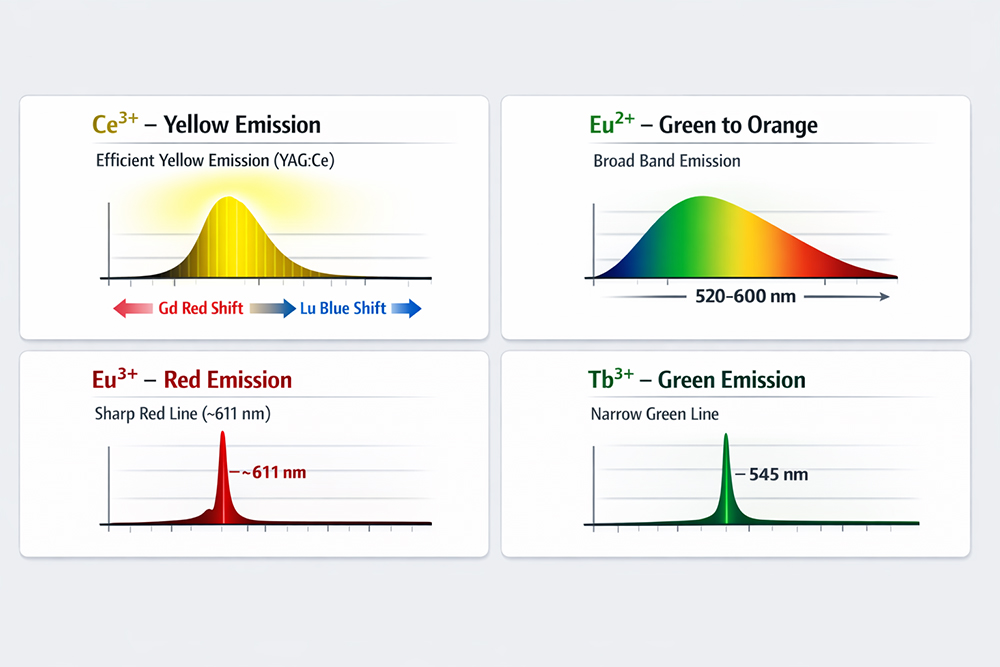
After synthesis, an annealing process can cut down on the scattering of light. A properly treated Lanthanum Fluoride sample tends to transmit light more effectively in both the ultraviolet and infrared ranges. In addition, when used as a host for lanthanide dopants, the material shows improved brightness and clarity. These tweaks can lead to better performance in devices that rely on precise optical properties.
Controlled heat treatment also affects how hard and tough Lanthanum Fluoride can be. When treated at the right temperatures, the material shows increased resistance to breaking and can handle sudden changes in temperature. This makes it a reliable candidate for use in harsh environments where mechanical stress and thermal shocks are common.
It can be helpful to compare Lanthanum Fluoride with other similar materials. For instance, Yttrium Fluoride behaves differently when heated. Its thermal expansion and phase stability do not follow the same patterns, which means each compound may suit different needs. Dysprosium Fluoride also follows its own sequence of changes when exposed to high temperatures. By looking at these comparisons, one can appreciate the unique characteristics of Lanthanum Fluoride and choose the right material for the right application.
Different applications call for different heat treatment approaches. In the case of optical coatings and windows, the annealing temperature is tuned to maximize transparency and help the material resist changes in the environment. Solid-state fluoride-ion batteries benefit from thermal processing by producing pellets with stronger and more conductive structures. Similarly, in catalytic and sensing platforms, heating can help form specific sites on the surface that work more efficiently in chemical reactions or sensor operations. Data from common cases show that small changes in the temperature profile during annealing can lead to significant improvements in performance.
Using heat treatment wisely offers a straightforward method to improve the properties of Lanthanum Fluoride. From a microstructural point of view, the grain size grows and defects lessen, while the phase transition and surface chemistry changes open doors to better optical, ionic, and mechanical performance. By comparing it with other fluoride materials, one sees that Lanthanum Fluoride holds many advantages that can be refined with the right protocol. This steady approach has been tried and tested over many years by experts in the field. For those who require reliable materials for high-performance applications, the quality of the Lanthanum Fluoride supplied by Stanford Materials Corporation (SMC) stands as a dependable choice.
Eric Loewen
Eric Loewen graduated from the University of Illinois studying applied chemistry. His educational background gives him a broad base from which to approach many topics. He has been working with topics about advanced materials for over 5 years at Stanford Materials Corporation (SMC). His main purpose in writing these articles is to provide a free, yet quality resource for readers. He welcomes feedback on typos, errors, or differences in opinion that readers come across.

 Inquiry List